
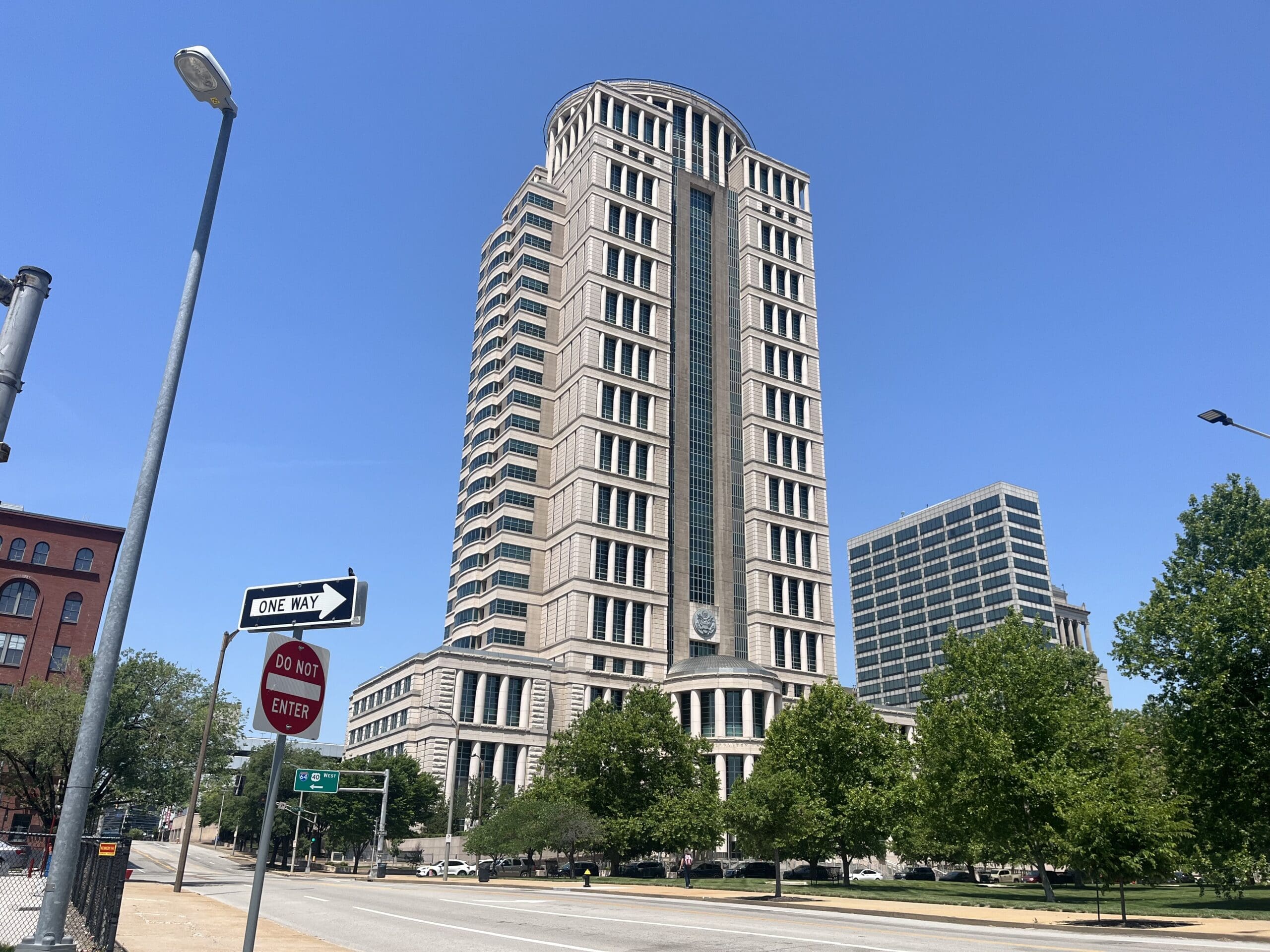
ST. LOUIS, MO – November 10, 2026 (TheBrighterSideofBlue) An undercover investigation conducted by the Missouri State Highway Patrol has resulted in an 11-year federal prison sentence for a 22-year-old St. Ann man who repeatedly sold fentanyl and methamphetamine to an undercover state trooper.
Jalin Jefferson, of St. Ann, Missouri, was sentenced Monday, November 9, 2026, by U.S. District Judge Maria A. Lanahan in federal court in St. Louis. The sentencing followed Jefferson’s guilty plea to five federal drug offenses involving fentanyl and methamphetamine.
The investigation illustrates an important side of modern law enforcement that often receives less public attention: the patient, deliberate work of undercover investigators who gather evidence, identify suspected drug distributors, and build criminal cases that can withstand scrutiny in federal court.
According to the U.S. Attorney’s Office for the Eastern District of Missouri, Jefferson admitted selling 998 capsules containing fentanyl and at least 300 grams of methamphetamine during four transactions with an undercover Missouri State Highway Patrol trooper.
The transactions occurred between October 22 and November 5, 2025.
The investigation ultimately led to Jefferson’s guilty plea in July 2026 and his sentencing approximately one year after the undercover purchases.
How the Missouri State Highway Patrol Investigation Began
The case originated in the fall of 2025, when the Missouri State Highway Patrol received information indicating that Jefferson was distributing fentanyl and methamphetamine.
Rather than immediately pursuing an arrest based solely on that information, investigators developed an undercover operation designed to establish evidence of criminal activity.
A confidential source introduced Jefferson to an undercover Missouri State Highway Patrol trooper.
That introduction provided investigators with an opportunity to document drug transactions directly, rather than relying exclusively on secondhand information or allegations.
Over approximately two weeks, Jefferson sold fentanyl, methamphetamine, or both to the undercover trooper on four separate occasions.
The repeated transactions became central to the federal prosecution.
Each controlled purchase provided investigators with evidence relevant to establishing that Jefferson was distributing illegal drugs.
The Department of Justice has not publicly disclosed the identity of the confidential source, the undercover trooper, or the precise locations where the transactions occurred.
Those details are not necessary to understand the significance of the investigation, but their absence is worth recognizing when evaluating the publicly available account.
Nearly 1,000 Fentanyl Capsules Sold
Among the most concerning details disclosed by federal prosecutors was the quantity of fentanyl-containing capsules involved.
Jefferson admitted selling 998 capsules containing fentanyl during the undercover operation.
He also admitted selling at least 300 grams of methamphetamine.
Fentanyl is a powerful synthetic opioid that has contributed to overdose deaths throughout the United States. Illicitly manufactured fentanyl is particularly dangerous because consumers may not know the amount or composition of the substance they are purchasing.
The presence of fentanyl in capsules does not establish the exact dosage contained in each capsule. Federal authorities did not disclose the total weight or purity of the fentanyl involved in Jefferson’s transactions.
Nevertheless, the number of capsules demonstrates the scale of the sales documented during the investigation.
Methamphetamine presents a different set of dangers, including addiction, cardiovascular complications, and other serious health consequences.
The distribution of both substances presents significant challenges for law enforcement agencies attempting to reduce the availability of dangerous drugs in their communities.
For investigators, documenting the transactions was an important step toward establishing the criminal conduct that Jefferson subsequently admitted in federal court.
Search of St. Ann Residence Revealed More Drugs
Following the final undercover transaction on November 5, 2025, investigators conducted a court-authorized search of Jefferson’s residence.
During that search, authorities discovered two large bags containing additional fentanyl capsules, along with drug paraphernalia.
The discovery provided further evidence relevant to the investigation.
The Department of Justice did not specify the exact number of capsules recovered during the residential search or disclose their total weight.
The search also formed part of the broader evidence supporting the federal case, which included a charge of possession with intent to distribute fentanyl.
Court-authorized searches are an important investigative tool because they allow officers to obtain evidence under established legal procedures.
In this case, the search followed multiple documented drug transactions and contributed to the prosecution that eventually resulted in Jefferson’s prison sentence.
Five Federal Drug Offenses
Jefferson pleaded guilty in July 2026 in U.S. District Court in St. Louis.
His guilty plea involved five federal offenses:
- One count of distribution of fentanyl.
- Three counts of distribution of fentanyl and methamphetamine.
- One count of possession with intent to distribute fentanyl.
The charges reflected both the undercover drug sales and the additional drug-related evidence obtained during the investigation.
On November 9, Judge Lanahan sentenced Jefferson to 11 years in federal prison.
That sentence represents 132 months of incarceration.
The Department of Justice announcement did not specify whether the court imposed any additional period of supervised release or other conditions.
The publicly announced outcome establishes that Jefferson was convicted through his guilty plea and subsequently sentenced for the federal offenses.
The Importance of Undercover Police Work
For The Brighter Side of Blue, this case provides an opportunity to examine a dimension of policing that frequently takes place outside public view.
Undercover drug investigations require officers to operate in situations where their law enforcement identities are concealed.
The work can involve uncertainty, exposure to potentially dangerous individuals, and the challenge of documenting criminal conduct without compromising an investigation.
Officers must also follow applicable laws, investigative procedures, and evidence-handling requirements.
Although the Department of Justice did not provide operational details about the specific techniques used in Jefferson’s case, the confirmed sequence of events demonstrates how a confidential source and an undercover trooper contributed to a successful prosecution.
The trooper participated in four drug transactions over a relatively short period.
Investigators then conducted a residential search, and federal prosecutors ultimately obtained a guilty plea.
This sequence highlights how investigative work performed by state law enforcement can become the foundation for federal criminal proceedings.
It also demonstrates that the Missouri State Highway Patrol’s responsibilities extend beyond traffic enforcement and highway safety.
The agency investigates criminal activity, including serious drug offenses, and can work with federal prosecutors when the evidence supports federal charges.
State Investigation, Federal Prosecution
The Missouri State Highway Patrol investigated Jefferson’s case, while the U.S. Attorney’s Office for the Eastern District of Missouri handled the federal prosecution.
Assistant U.S. Attorney Jennifer Szczucinski prosecuted the case.
The relationship between state investigators and federal prosecutors is an important component of the criminal justice system.
State law enforcement officers frequently encounter criminal activity that may violate both state and federal statutes.
Depending on the circumstances, an investigation may be prosecuted in state court, federal court, or involve coordination among multiple agencies.
Federal drug prosecutions can involve significant prison sentences, particularly when the offenses concern distribution of controlled substances.
In Jefferson’s case, the investigation conducted by Missouri State Highway Patrol personnel resulted in federal charges and an 11-year sentence.
The case demonstrates how evidence collected at the state level can support prosecution in the federal judicial system.
Project Safe Neighborhoods and Public Safety
Federal authorities identified Jefferson’s prosecution as part of Project Safe Neighborhoods, commonly known as PSN.
Project Safe Neighborhoods is a nationwide Department of Justice initiative intended to improve public safety through coordination among federal, state, local, and tribal law enforcement agencies, prosecutors, and community partners.
The program is coordinated through U.S. Attorney’s Offices across the country’s 94 federal judicial districts.
Its approach includes identifying serious criminal activity, strengthening cooperation among agencies, and using prosecution and other strategies to address public safety concerns.
The Department of Justice also identified Project Safe Neighborhoods as a component of Operation Take Back America, a broader federal enforcement initiative.
While these programs establish the policy framework under which the prosecution was announced, the central facts of Jefferson’s case remain straightforward.
A state law enforcement investigation documented repeated drug sales; additional drugs were discovered during a search; the defendant pleaded guilty; and a federal judge imposed an 11-year prison sentence.
Why Drug Investigations Matter to Local Communities
Drug distribution is not simply a matter of illegal transactions between buyers and sellers.
The availability of fentanyl and methamphetamine can have consequences extending to families, neighborhoods, emergency medical personnel, healthcare providers, and public safety agencies.
Fentanyl is especially concerning because even small amounts can cause fatal respiratory depression.
Illicitly manufactured fentanyl may also appear in counterfeit pills or mixtures with other drugs, increasing the danger to people who may not know what they are consuming.
Methamphetamine can cause serious physical and psychological harm, particularly with repeated use.
Drug enforcement is one part of the broader response to these problems.
Treatment, prevention, education, overdose-response services, and recovery support also play important roles.
A successful prosecution does not, by itself, eliminate drug trafficking or substance use disorders in a community.
However, criminal investigations can hold individual distributors accountable and disrupt specific sources of illegal drugs.
The Jefferson case illustrates that approach through a documented investigation and a completed federal prosecution.
Recognizing the Work Behind the Arrest
Public attention often focuses on dramatic arrests, police pursuits, or emergency responses.
Many criminal investigations, however, involve work that is far less visible.
Investigators must gather reliable information, develop evidence, coordinate operations, and prepare their findings for prosecutors.
The process can take months or longer before the public learns the outcome.
In Jefferson’s case, the initial undercover transactions occurred in October and November 2025.
His guilty plea followed in July 2026.
The sentencing occurred in November 2026.
That timeline illustrates how an investigation can continue through the judicial process long after the original law enforcement activity has concluded.
The outcome also underscores an important distinction between making an arrest and obtaining a conviction.
An arrest begins a legal process. A guilty plea or conviction establishes criminal responsibility, and sentencing determines the punishment imposed by the court.
Here, the case proceeded through those stages to a completed sentencing.
A Reminder of the Highway Patrol’s Broader Mission
The Missouri State Highway Patrol is widely associated with roadway safety, traffic enforcement, crash investigations, and emergency response.
Its responsibilities also include criminal investigations and efforts to combat illegal drug activity.
The Jefferson prosecution offers a specific example of that broader mission.
The agency’s investigators developed an undercover operation, documented repeated drug transactions, and gathered evidence that supported a federal prosecution.
For residents of St. Ann and the greater St. Louis metropolitan area, the case serves as a reminder that serious criminal investigations can occur within their communities even when the investigative work is not immediately visible.
It also highlights the importance of cooperation between law enforcement agencies and prosecutors.
The Missouri State Highway Patrol conducted the investigation, while the U.S. Attorney’s Office pursued the criminal charges through federal court.
The Brighter Side of Blue Perspective
The mission of The Brighter Side of Blue includes telling stories about the work, dedication, and responsibilities of law enforcement officers, including efforts that do not always generate widespread public attention.
The Jefferson case is an example of investigative police work resulting in a documented judicial outcome.
It is not necessary to embellish the circumstances or speculate about unreported dangers to recognize the significance of the investigation.
The publicly established facts are substantial: four undercover drug transactions, nearly 1,000 fentanyl-containing capsules sold, at least 300 grams of methamphetamine sold, additional drugs discovered during a residential search, five federal offenses, and an 11-year prison sentence.
Those facts provide a meaningful account of the work performed by the Missouri State Highway Patrol and the federal prosecutors who handled the case.
They also demonstrate why careful evidence collection and cooperation among law enforcement agencies remain important components of the criminal justice system.
For the officers involved, the prosecution represents the conclusion of an investigation that began more than a year before the sentencing announcement.
For the public, it provides another example of how undercover law enforcement investigations can result in accountability for serious drug offenses.
Source: U.S. Department of Justice, U.S. Attorney’s Office for the Eastern District of Missouri, November 10, 2026.
Editorial note: This article distinguishes confirmed facts released by federal authorities from general explanations of law enforcement practices and public safety concerns. Jefferson pleaded guilty and was sentenced; the criminal conduct described in the case is not merely an unproven allegation.