
Three separate police encounters, a pursuit, a multiagency standoff, and the discovery of 29 firearms highlight the importance of persistent law enforcement investigations.
ST. LOUIS, MO – November 7, 2026 (TheBrighterSideofBlue) A federal prison sentence handed down this week brings a significant firearms case involving the St. Louis Metropolitan Police Department (SLMPD) to a conclusion, demonstrating how routine traffic enforcement, investigative persistence, and cooperation between local and federal law enforcement agencies can lead to serious criminal convictions.
Darrion Boyd-Barnes, 29, of St. Louis, was sentenced Wednesday, November 4, 2026, to 87 months in federal prison after pleading guilty to three counts of being a felon in possession of a firearm.
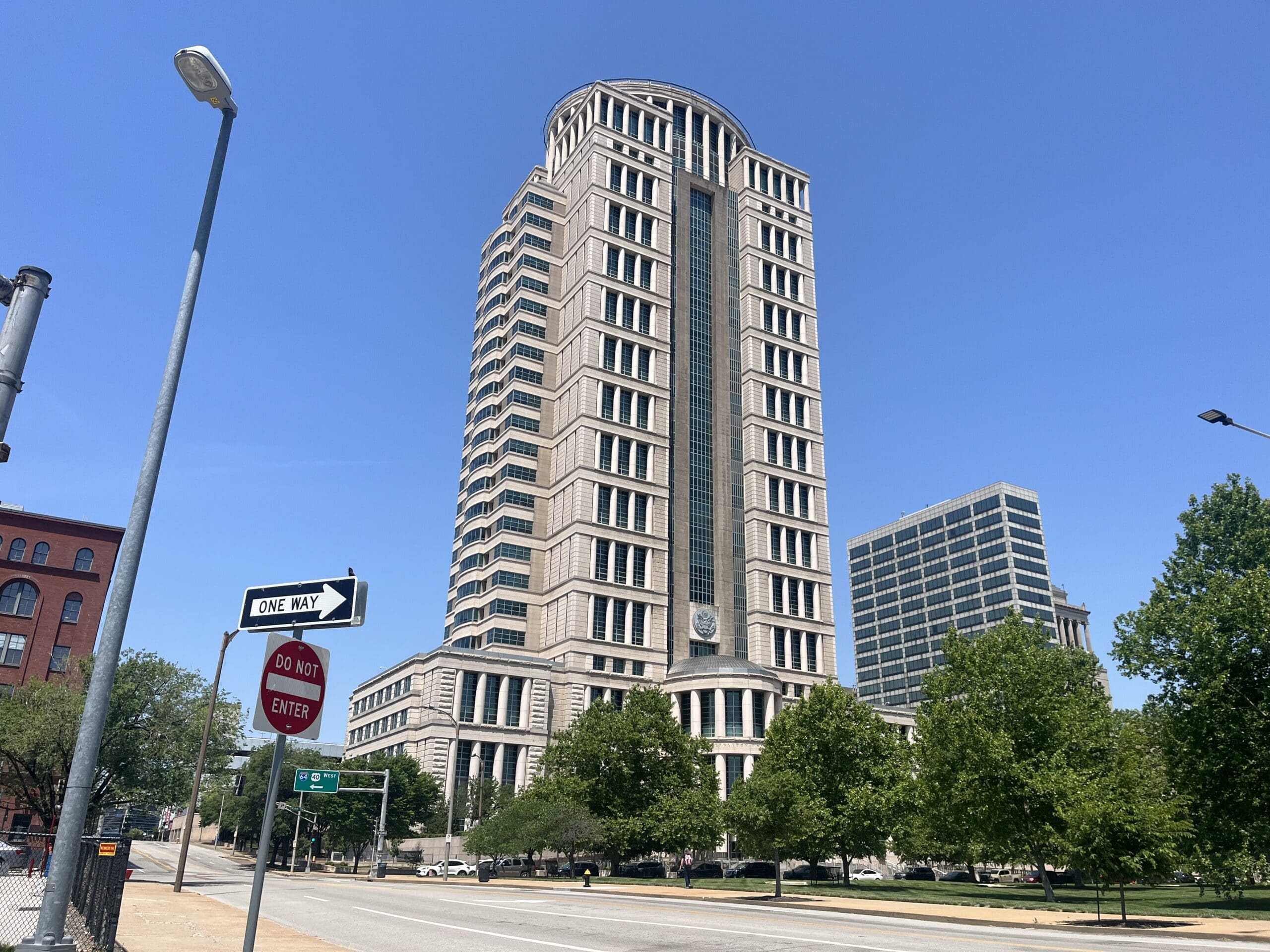
U.S. District Judge Zachary M. Bluestone imposed the sentence in the U.S. District Court for the Eastern District of Missouri.
The case involved three separate encounters with St. Louis police officers between September 2022 and November 2025. Each encounter began with a traffic stop, but the circumstances eventually escalated into a much larger investigation involving dozens of firearms, stolen weapons, and handguns illegally modified to operate as fully automatic weapons.
The investigation was conducted by the St. Louis Metropolitan Police Department and the Bureau of Alcohol, Tobacco, Firearms and Explosives (ATF), with federal prosecutors ultimately securing the conviction and prison sentence.
For The Brighter Side of Blue, the case illustrates an important aspect of police work that often receives less attention than dramatic arrests or emergency responses: the cumulative impact of officers performing everyday enforcement duties, documenting criminal conduct, and helping build cases that can withstand scrutiny in federal court.
First Encounter: An Expired Temporary License Plate
The first documented encounter occurred on September 22, 2022, when St. Louis police officers stopped a vehicle displaying an expired temporary license plate.
What began as a routine traffic enforcement action quickly became more serious.
According to federal prosecutors, Boyd-Barnes provided officers with a false name. Investigators subsequently determined that he had an active arrest warrant.
Officers arrested Boyd-Barnes and discovered a loaded Glock 29 10mm pistol.
The discovery was significant because Boyd-Barnes had a previous felony conviction, making his possession of a firearm unlawful under federal law.
The encounter demonstrates how seemingly minor traffic violations can sometimes reveal more serious criminal activity.
Officers conducting traffic stops must assess the immediate circumstances, verify identification, determine whether outstanding warrants exist, and respond appropriately when they discover evidence of additional offenses.
In this instance, an expired temporary tag led to identifying a wanted individual and recovering a loaded firearm.
Although traffic enforcement is often viewed primarily as a roadway safety function, encounters like this show its potential role in identifying individuals wanted by law enforcement.
Second Encounter: Another Loaded Handgun
Nearly three years later, on April 16, 2025, Boyd-Barnes again encountered St. Louis police during a traffic stop.
This time, he was a passenger in a vehicle stopped for displaying an improper license plate.
During the encounter, officers discovered that Boyd-Barnes had an active arrest warrant.
Police also recovered a loaded Palmetto State Armory Dagger 9mm handgun.
The second incident became another documented example of unlawful firearm possession by an individual previously convicted of a felony.
For investigators, repeated encounters involving firearms can become important when prosecutors evaluate whether an individual has demonstrated an ongoing pattern of unlawful conduct.
Each incident must be supported by its own evidence, and prosecutors must establish the elements of the offenses charged.
In this case, the two encounters ultimately became part of a three-count federal prosecution.
The repeated discoveries also illustrate why accurate police reports, evidence handling, and coordination between investigative agencies are essential.
An arrest may last only minutes, but the records and evidence developed during that encounter can remain important years later.
Third Encounter: Traffic Stop Escalates Into Pursuit
The most serious incident described in the federal case occurred on November 12, 2025.
According to the Department of Justice, St. Louis police officers observed Boyd-Barnes driving a Jeep through three stop signs.
Officers stopped the vehicle and instructed him to exit.
Instead of complying, Boyd-Barnes accelerated away from the traffic stop.
The incident developed into a pursuit that ended at his girlfriend’s residence in St. Louis County.
Multiple law enforcement agencies responded, and the situation escalated into a standoff.
Federal prosecutors reported that Boyd-Barnes repeatedly refused to leave the residence before escaping.
The Department of Justice’s account does not identify every agency that responded, specify the standoff’s duration, or describe the circumstances of Boyd-Barnes’ subsequent apprehension.
Nevertheless, the documented events demonstrate the complications officers can encounter when a traffic stop develops into a situation involving flight, a residence, and multiple responding agencies.
Such incidents require officers to balance enforcement objectives with the safety of fellow officers, nearby residents, and other members of the public.
Coordination among responding agencies becomes particularly important when an incident crosses jurisdictional boundaries.
Police Discover 29 Firearms
The investigation following the November 2025 incident produced one of the case’s most significant discoveries.
Police recovered 29 firearms from the St. Louis County residence.
According to federal prosecutors, the weapons included:
- AR-style pistols and rifles.
- A shotgun.
- Multiple stolen pistols.
- Five pistols illegally converted to operate as fully automatic firearms using machine gun conversion devices.
The discovery substantially expanded the seriousness of the circumstances described in the federal case.
Machine gun conversion devices, sometimes referred to as switches, can alter certain semiautomatic firearms to allow automatic fire.
These devices have become a major concern for law enforcement because they can dramatically increase the number of rounds discharged in a short period.
The presence of five illegally converted pistols among the recovered weapons illustrates the potential dangers associated with these modifications.
The discovery of multiple stolen pistols also raised concerns beyond the illegal possession offenses ultimately prosecuted.
However, the Department of Justice did not publicly identify the original owners of the stolen firearms, explain how the weapons were obtained, or establish that every recovered firearm belonged to Boyd-Barnes.
Those distinctions are important when reporting the case.
The verified facts are that officers recovered 29 firearms from the residence and that the subsequent federal prosecution resulted in guilty pleas to three counts of unlawful firearm possession.
Federal Prosecutors Address Repeated Violations
Boyd-Barnes pleaded guilty on August 4, 2026, in federal court in St. Louis.
His guilty pleas covered three counts of being a felon in possession of a firearm.
At the November 4 sentencing hearing, Assistant U.S. Attorney Paul D’Agrosa addressed the defendant’s history of unlawful firearm possession and fleeing law enforcement.
According to the Department of Justice, D’Agrosa told the court that Boyd-Barnes had continued this conduct since he was 18, despite previous encounters with law enforcement.
The prosecution’s argument emphasized the repeated nature of the offenses rather than treating the encounters as unrelated incidents.
Judge Bluestone subsequently imposed the 87-month federal prison sentence, equivalent to seven years and three months.
The outcome represents a completed federal prosecution supported by the investigative work of the St. Louis Metropolitan Police Department and ATF.
It also demonstrates how incidents documented over several years can become part of a broader federal criminal case.
The Role of the St. Louis Metropolitan Police Department
The St. Louis Metropolitan Police Department played a central role in the encounters federal prosecutors described.
The three traffic stops resulted in the discovery of loaded firearms, identification of outstanding warrants, and ultimately a larger investigation involving weapons recovered from a residence.
The case highlights several key responsibilities of patrol officers and investigators.
Traffic enforcement: Officers identified vehicle violations that led to the initial encounters.
Identification and warrant checks: Police discovered active warrants during the first two stops and learned the suspect used a false name during the first encounter.
Firearms recovery: Officers recovered loaded handguns during the earlier incidents, while the third encounter led to the discovery of a substantially larger collection of weapons.
Interagency cooperation: Local police and federal investigators worked on a case that ultimately resulted in federal prosecution.
Documentation and evidence: The separate incidents formed the basis of the criminal charges to which Boyd-Barnes pleaded guilty.
The importance of these responsibilities extends beyond any single prosecution.
Police officers routinely encounter situations in which an apparently minor violation becomes the starting point for a more significant investigation.
Their ability to recognize criminal conduct, document evidence, and coordinate with prosecutors can have consequences long after the initial enforcement action.
ATF and Federal Law Enforcement Cooperation
The Bureau of Alcohol, Tobacco, Firearms and Explosives participated in the investigation alongside the St. Louis Metropolitan Police Department.
ATF is the federal agency responsible for investigating numerous firearms-related offenses, including illegal firearms trafficking, unlawful possession, and violations involving machine guns and conversion devices.
Federal involvement can be especially important when investigators encounter repeat firearms offenders or weapons that may violate federal criminal statutes.
In the Boyd-Barnes case, the prosecution proceeded in the Eastern District of Missouri, where Assistant U.S. Attorney Paul D’Agrosa handled the criminal case.
The federal charges focused on Boyd-Barnes’ unlawful possession of firearms as a convicted felon.
Although the investigation uncovered stolen weapons and illegally converted pistols, the publicly announced conviction was for the three felon-in-possession counts.
The distinction reinforces the importance of separating investigative discoveries from the specific offenses established through a guilty plea or criminal verdict.
Project Safe Neighborhoods and Violent Crime Prevention
Federal prosecutors identified the case as part of Project Safe Neighborhoods, a nationwide Department of Justice initiative intended to reduce violent crime through coordinated enforcement and prosecution.
The program brings together federal, state, local, and tribal law enforcement agencies, prosecutors, and community partners.
Its objectives include identifying serious criminal activity, strengthening investigative partnerships, and using federal resources to address offenses that threaten public safety.
U.S. Attorneys’ offices coordinate Project Safe Neighborhoods across the country, tailoring enforcement strategies to local public safety concerns.
In the St. Louis region, cooperation among SLMPD, ATF, and federal prosecutors provides a mechanism to pursue federal charges when investigations establish violations of federal firearms laws.
The Department of Justice also identified Project Safe Neighborhoods as a component of its broader Operation Take Back America initiative.
While the broader programs encompass numerous enforcement priorities, the Boyd-Barnes prosecution provides a concrete example of local police investigations contributing to a federal criminal sentence.
Why Routine Police Work Matters
One of the most important lessons from this case is that major criminal investigations do not always begin with specialized operations or lengthy surveillance.
Sometimes they begin with an expired license plate.
Sometimes they begin with an officer recognizing a traffic violation and conducting a lawful stop.
And sometimes the significance of those encounters becomes clear only after investigators connect evidence developed over several years.
The Boyd-Barnes case involved three separate traffic stops, each contributing to the federal prosecution.
The first uncovered a loaded handgun and an outstanding warrant.
The second resulted in another loaded handgun being recovered.
The third developed into a pursuit, a multiagency standoff, and the discovery of 29 firearms.
These events demonstrate how ordinary enforcement responsibilities can intersect with larger public safety investigations.
They also illustrate the value of cooperation among agencies with different responsibilities and jurisdictions.
Patrol officers, investigators, federal agents, and prosecutors each contribute different expertise to the criminal justice process.
A successful prosecution depends not simply on making an arrest but on gathering admissible evidence, establishing the necessary elements of criminal offenses, and presenting the case through the judicial system.
Recognizing the Work Behind the Outcome
The Brighter Side of Blue focuses on the professional responsibilities, service, and contributions of law enforcement officers.
Cases such as this provide an opportunity to recognize work that may otherwise receive limited public attention.
The officers involved in the initial traffic stops could not necessarily have known that their encounters would eventually contribute to a federal prosecution involving multiple firearms violations.
Yet those encounters became part of a case resulting in a substantial prison sentence.
The Department of Justice has not publicly identified the individual SLMPD officers involved in the stops or the personnel who participated in the subsequent investigation.
Consequently, the case should be viewed as an example of institutional cooperation rather than an occasion to attribute particular investigative achievements to unidentified officers.
The verified record establishes that the St. Louis Metropolitan Police Department and ATF investigated the case and that federal prosecutors obtained the guilty pleas and sentence.
The work also underscores the responsibilities officers carry when responding to unpredictable situations.
A traffic stop can involve an outstanding warrant, a loaded firearm, a fleeing driver, or circumstances requiring additional resources.
Responding professionally and coordinating with other agencies is essential to effective policing.
A Federal Sentence and a Public Safety Outcome
The November 4 sentencing brings the federal criminal case against Boyd-Barnes to a significant conclusion.
The 87-month prison term follows years of encounters involving unlawful firearm possession, culminating in the discovery of a substantial number of weapons during the final investigation.
The case also highlights the risks posed by illegal machine gun conversion devices and the challenges associated with repeated firearm violations.
For the St. Louis Metropolitan Police Department, the prosecution demonstrates how local enforcement activities can contribute to federal criminal cases.
For ATF and federal prosecutors, it reflects the importance of partnerships that allow agencies to combine investigative resources and pursue violations of federal law.
For the public, the case provides a documented example of how law enforcement agencies respond when repeated illegal firearm possession is established.
It also reminds us that effective policing involves more than the most visible moments of an investigation.
Traffic enforcement, identification checks, evidence recovery, investigative follow-through, and coordination with prosecutors all contribute to the broader criminal justice process.
Federal court ultimately determined the outcome, where Boyd-Barnes admitted the offenses and received his sentence.
Conclusion: Persistence, Cooperation, and Accountability
The federal sentencing of Darrion Boyd-Barnes illustrates how repeated encounters with local police can lead to significant federal consequences.
Beginning with a traffic stop in September 2022, continuing through another encounter in April 2025, and culminating in a pursuit and major firearms recovery in November 2025, the case developed over more than three years.
The discovery of 29 firearms, including stolen pistols and illegally converted automatic weapons, made the final encounter particularly significant.
Through the combined efforts of the St. Louis Metropolitan Police Department, ATF, and the U.S. Attorney’s Office for the Eastern District of Missouri, the investigation resulted in guilty pleas and a sentence of seven years and three months in federal prison.
For The Brighter Side of Blue, the story highlights the importance of consistent police work, effective investigative partnerships, and the criminal justice system’s role in holding repeat offenders accountable.
The work behind these outcomes often begins with ordinary responsibilities officers perform on patrol.
In this case, those responsibilities contributed to a federal prosecution that brought years of documented firearm violations before the court.
Sources and Editorial Note
Primary source: U.S. Department of Justice, U.S. Attorney’s Office for the Eastern District of Missouri, November 4, 2026, St. Louis Felon Sentenced to 87 Months in Prison After Being Caught with Firearms Repeatedly.
Additional source: U.S. Department of Justice, August 4, 2026, St. Louis Felon Admits Repeatedly Being Caught with Firearms.
https://www.justice.gov/usao-edmo/pr/st-louis-felon-admits-repeatedly-being-caught-firearms
Editorial note: This article is based on official federal court-related announcements issued by the U.S. Attorney’s Office for the Eastern District of Missouri. The reported conviction and sentence are established outcomes of the federal proceedings. Additional commentary concerning policing, investigative practices, and interagency cooperation is provided for informational purposes and should not be interpreted as establishing facts beyond those publicly documented. The discovery of firearms at the residence does not independently establish ownership of every weapon or additional criminal convictions beyond the offenses reported by federal prosecutors.