
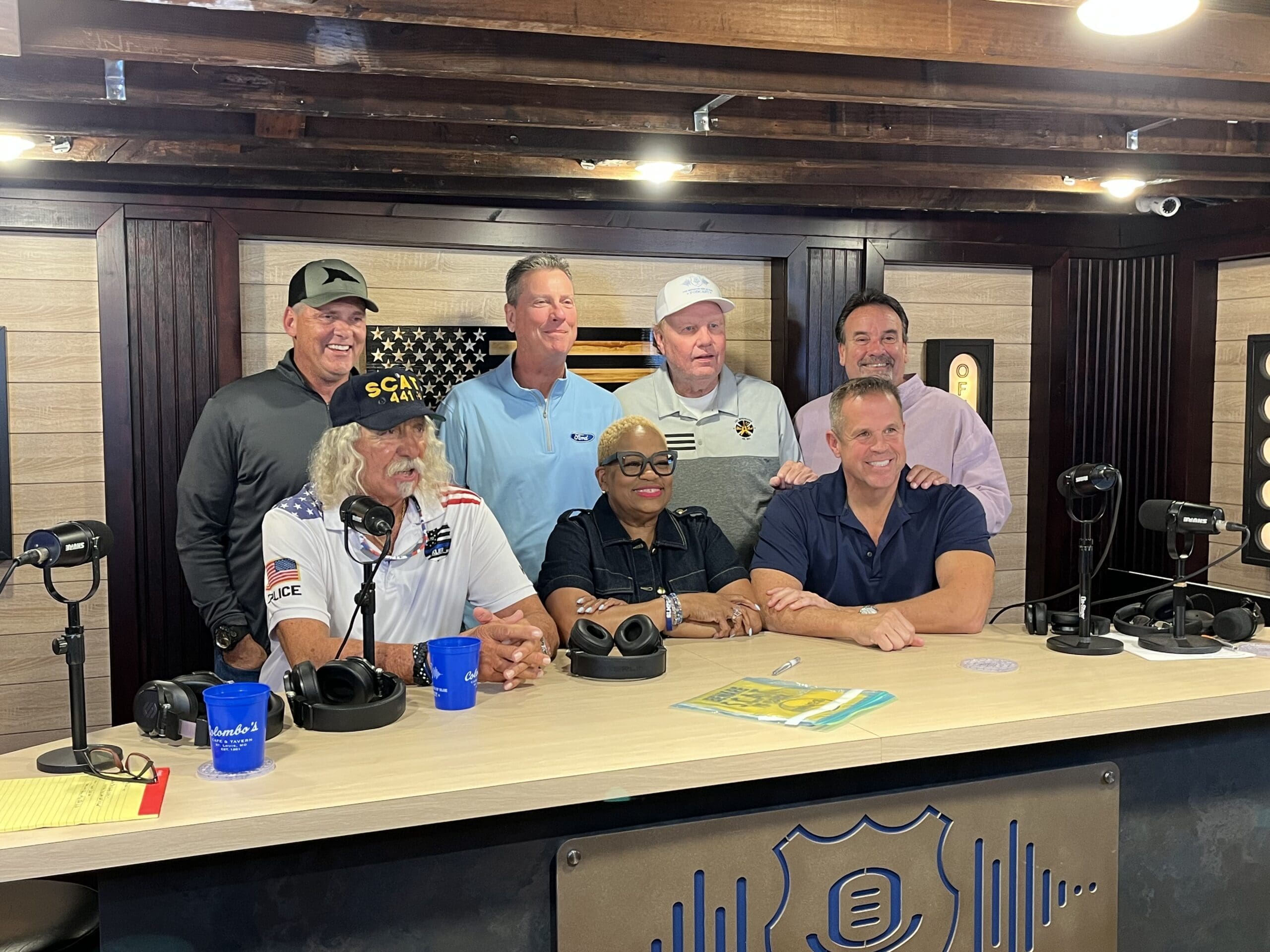
The history and legacy of the St. Louis Metropolitan Police Department’s Street Corner Apprehension Team
ST. LOUIS, MO – November 3, 2026 (TheBrighterSideofBlue) November 3, 2026 — The Brighter Side of Blue — Before sophisticated surveillance networks, digital intelligence systems, and real-time crime centers became familiar tools of modern policing, specialized St. Louis police officers were confronting drug trafficking and street crime directly in the city’s neighborhoods.
Among those operations was a unit whose four-letter name became part of St. Louis law enforcement history: SCAT — the Street Corner Apprehension Team.
The St. Louis Metropolitan Police Department (SLMPD) established SCAT to address street-level narcotics activity. The department’s historical materials document its existence and mission, and Missouri court records provide additional evidence of its involvement in criminal investigations.
For former officers, the history of specialized assignments like SCAT can represent much more than arrests and police reports. Such assignments often shaped careers, built lasting friendships, and created experiences that stayed memorable long after retirement.
For The Brighter Side of Blue, examining SCAT offers an opportunity to preserve an important chapter in the department’s history while considering how street-level policing has evolved.
What Was SCAT?
The Street Corner Apprehension Team was a specialized enforcement operation within SLMPD focused on street-level drug dealing.
The department’s historical publication, Celebrating 200 Years of Service to St. Louis, identifies SCAT as one of the programs developed to address specific public-safety problems.
The publication discusses the unit in the context of policing developments during the 1980s, when St. Louis faced financial pressures, staffing challenges, and increasing demands for police services.
SCAT represented an effort to concentrate law enforcement resources on a particular criminal problem.
Unlike patrol officers, who answered a broad range of emergency calls, specialized enforcement personnel could focus on suspected narcotics activity and related investigations.
Regular patrol duties included responding to disturbances, investigating accidents, handling domestic incidents, assisting residents, and maintaining a visible presence throughout assigned districts.
Specialized narcotics enforcement required a different concentration of resources.
Officers investigating suspected drug dealing needed to recognize patterns of illegal activity, identify suspects, gather evidence, and coordinate enforcement actions.
The work could involve unpredictable circumstances, including encounters with armed suspects or individuals associated with violent criminal activity.
It also demanded an understanding of constitutional protections, search-and-seizure requirements, evidence collection, and courtroom procedures.
These responsibilities made specialized narcotics enforcement a demanding assignment.
The Drug Enforcement Era in St. Louis
During the 1980s and 1990s, illegal drug distribution became a major concern for police departments throughout the United States.
St. Louis faced many of the same challenges confronting other large American cities.
Open-air drug markets, neighborhood complaints, violence associated with illegal narcotics distribution, and repeated criminal activity in particular locations placed considerable pressure on law enforcement agencies.
For residents, these problems could affect everyday life.
Families might become concerned about suspected drug dealing near their homes. Business owners could worry about criminal activity around their establishments. Neighborhood organizations often sought greater police attention to locations associated with recurring problems.
For police officers, the challenge extended beyond making individual arrests.
Removing one suspected dealer did not necessarily eliminate the market operating at a particular location.
Departments had to consider whether enforcement operations disrupted criminal activity, whether other individuals replaced those arrested, and whether neighborhood conditions improved.
Across the country, police departments developed specialized narcotics teams, undercover operations, targeted patrol assignments, and coordinated investigations.
SCAT was part of St. Louis’ response to these challenges.
Its mission reflected the department’s decision to address drug dealing where it was occurring directly on city streets.
The Challenges of Street-Level Enforcement
Street-level narcotics enforcement can be unpredictable.
Officers investigating suspected drug transactions may have limited information about the individuals involved, whether weapons are present, or whether additional suspects are nearby.
Situations can develop rapidly.
Officers must make decisions while remaining within the legal standards governing detention, searches, seizures, and arrests.
They must document their observations accurately and preserve evidence that may later become important in court.
An arrest does not establish guilt. Criminal charges must be supported by evidence, and prosecutors must prove their cases beyond a reasonable doubt at trial.
For specialized enforcement officers, successful investigations therefore require more than locating suspected criminal activity.
They require sound judgment, teamwork, careful documentation, and respect for constitutional rights.
Missouri appellate court records document undercover narcotics investigations involving SCAT during the 1990s and early 2000s.
Those records establish that the unit’s activities extended beyond its description in departmental historical materials.
They also demonstrate the importance of judicial oversight.
Investigative procedures, officers’ observations, and evidence collected during police operations can become subjects of legal examination.
The effectiveness of police work depends not only on enforcement activity but also on whether investigations meet criminal justice requirements.
Why Specialized Units Become Legendary
Within law enforcement, certain assignments develop reputations that endure long after their original missions have changed.
Specialized teams often create strong professional relationships because officers work together repeatedly under demanding circumstances.
Members learn one another’s strengths, communication styles, and judgment.
Trust becomes especially important when investigations take unexpected turns.
An officer must understand fellow team members’ responsibilities and be confident everyone is prepared to respond appropriately.
These shared experiences can create professional bonds lasting decades.
For retired officers, memories of specialized assignments may include difficult investigations, respected supervisors, influential mentors, and colleagues who became lifelong friends.
There may also be humorous stories about everyday police work that never appeared in official reports.
Those personal accounts provide a dimension of departmental history that statistics cannot capture.
However, a unit’s reputation should be distinguished from independently documented accomplishments.
The historical record confirms SCAT’s existence and mission, but this article has not identified comprehensive statistics establishing its effectiveness.
Understanding its legacy requires recognizing both the documented history and the personal experiences of those who served.
SCAT and the Evolution of SLMPD
The St. Louis Metropolitan Police Department has changed considerably since SCAT’s earlier years.
Technology, investigative procedures, departmental organization, and public expectations have evolved.
During the 1980s, SLMPD introduced improvements in communications, computer-aided dispatch, and automated identification systems.
Today, police departments have access to investigative resources that earlier generations could scarcely have imagined.
Digital evidence, electronic databases, surveillance systems, crime mapping, and real-time information sharing can help investigators identify suspects and analyze criminal activity.
Nevertheless, technology cannot replace every element of traditional police work.
Officers must still evaluate information, recognize suspicious circumstances, communicate effectively, and make decisions under pressure.
Experience remains important.
So does the ability to distinguish credible evidence from assumptions.
The history of specialized units like SCAT offers an opportunity to consider how earlier generations approached these responsibilities without today’s technological advantages.
Understanding the Neighborhoods
Effective street-level policing requires more than knowledge of criminal statutes.
Officers benefit from understanding the neighborhoods they serve.
Familiarity with local streets, businesses, recurring complaints, and community concerns can help investigators identify patterns and respond appropriately.
Relationships with residents can also provide valuable information.
People who live and work in neighborhoods affected by criminal activity frequently want safer streets and dependable police services.
Their cooperation may be essential to identifying recurring problems.
At the same time, police departments must avoid treating entire neighborhoods as suspicious simply because crimes have occurred there.
Most residents of communities affected by drug trafficking are not involved in criminal activity.
They are families, workers, business owners, and community members who deserve safety and fair treatment.
Effective enforcement must balance investigating criminal conduct with respect for constitutional rights and community trust.
This principle remains as important today as it was decades ago.
The Human Side of Police Work
Police history is often told through major arrests, significant investigations, and changes in departmental leadership.
But a department’s history also includes the daily experiences of its officers.
Police careers can involve long hours, missed family occasions, stressful investigations, and repeated exposure to difficult situations.
They can also produce lasting friendships and a strong sense of professional responsibility.
Former officers often remember colleagues as vividly as they remember particular investigations.
A discussion about an old assignment may begin with a humorous incident and lead to a serious recollection about a dangerous encounter, a respected supervisor, or a colleague who made an extraordinary contribution.
These experiences rarely appear in official historical publications.
Yet they remain part of law enforcement’s institutional memory.
As officers retire and generations change, firsthand knowledge can disappear unless someone makes an effort to preserve it.
Recorded conversations, photographs, documents, and personal accounts can help future generations understand what police work was like during earlier periods.
That is one reason the history of SCAT deserves attention.
Why The Brighter Side of Blue Matters
The Brighter Side of Blue provides a platform to discuss law enforcement experiences, preserve historical accounts, and recognize the people behind the badge.
The St. Louis-based podcast features conversations involving officers and others connected to the criminal justice system.
Its approach emphasizes the human experiences behind police careers.
SCAT’s history fits naturally within that mission.
It represents an opportunity to revisit an earlier generation of policing, examine the challenges officers encountered, and preserve accounts that might otherwise be forgotten.
These conversations can be particularly valuable when they involve individuals with direct experience.
Official records can establish organizational history and documented operations.
Firsthand recollections can explain the personalities, relationships, and circumstances surrounding those events.
Together, they provide a fuller understanding of police history.
The goal is not simply to celebrate the past.
It is to preserve it accurately while recognizing the contributions, challenges, and lessons associated with earlier law enforcement assignments.
Lessons for Modern Policing
The history of SCAT offers several subjects worth considering in discussions about contemporary policing.
First, specialized assignments require clearly defined objectives.
Departments must understand the problems they are attempting to address and determine whether dedicated personnel are producing meaningful results.
Second, training and teamwork remain essential.
Officers working in demanding assignments must communicate effectively, understand their responsibilities, and exercise sound judgment.
Third, lawful investigative procedures are fundamental.
Enforcement activity must be supported by credible evidence and conducted within constitutional requirements.
Fourth, community safety should remain the ultimate measure of success.
Arrest totals alone cannot establish whether a specialized enforcement strategy has improved neighborhood conditions.
Finally, historical experience deserves preservation.
Earlier generations of officers encountered challenges that may offer valuable lessons for today’s law enforcement professionals.
These principles extend beyond narcotics enforcement to violent-crime investigations, fugitive apprehension, and other specialized assignments.
Preserving the Legacy of SCAT
The Street Corner Apprehension Team emerged during a period when St. Louis was confronting significant concerns about illegal narcotics activity and neighborhood crime.
Its creation reflected SLMPD’s effort to address those problems through specialized street-level enforcement.
The unit’s documented history establishes its place within the department.
Its broader legacy deserves continued research and preservation.
Former officers may possess photographs, assignment records, personal recollections, and other materials that could help establish a more complete account of SCAT’s operations.
Those contributions would be valuable to anyone interested in St. Louis policing history.
The department’s official historical records explain why the unit existed.
Court documents provide evidence of particular investigations.
Personal accounts may help explain what the assignment meant to those who served.
Together, these sources can preserve a chapter of law enforcement history that might otherwise become increasingly difficult to reconstruct.
SCAT represents more than a four-letter acronym.
It represents a period when the St. Louis Metropolitan Police Department responded to street-level narcotics activity through a dedicated enforcement program.
It also represents the officers whose experiences became part of the department’s institutional history.
For The Brighter Side of Blue, preserving those stories is an important way to recognize the people who served and help future generations better understand policing’s past.
Watch the Accompanying SCAT Video
The accompanying video offers an opportunity to explore the history of the Street Corner Apprehension Team and the broader experiences associated with St. Louis law enforcement.
The historical information in this article provides context for SCAT’s mission, the period in which it operated, and the challenges of specialized narcotics enforcement.
Viewers are encouraged to consider the firsthand perspectives presented in the video alongside the documented historical record.
For retired officers, law enforcement families, St. Louis history enthusiasts, and members of the public, the subject offers an opportunity to learn more about a distinctive chapter in the department’s past.
Watch the accompanying video and join The Brighter Side of Blue in preserving the stories, personalities, and experiences that helped shape St. Louis law enforcement.
About The Brighter Side of Blue
The Brighter Side of Blue is a St. Louis-based law enforcement podcast that shares stories from the profession, preserves historical experiences, and recognizes the people behind the badge.
Through conversations with law enforcement professionals and others connected to the criminal justice system, the program explores police careers, investigations, memorable events, and the personal experiences that shape the profession.
Sources and Historical Notes
This article draws on the St. Louis Metropolitan Police Department’s Celebrating 200 Years of Service to St. Louis and Missouri appellate court records documenting SCAT-related narcotics investigations.
Editorial note: Historical materials document SCAT’s existence and street-level drug enforcement mission. The available sources do not establish a complete roster of officers assigned to the unit, precise founding and disbandment dates, comprehensive arrest statistics, conviction rates, or independently verified measures of its overall effectiveness in reducing crime.
The historical discussion is based on available departmental records, court documents, and general information about law enforcement practices during the period.
Certain details regarding SCAT’s organizational structure, leadership, operational procedures, and measurable accomplishments remain subject to further historical documentation.
The Brighter Side of Blue welcomes additional firsthand accounts, photographs, documents, and historical information from former SCAT members, retired SLMPD officers, and others with direct knowledge of the unit. Such contributions may help preserve a more comprehensive and accurate account of this chapter in St. Louis law enforcement history.
STL.News covered this story as well.
Video disclaimer: Statements, recollections, operational accounts, and historical claims presented in the accompanying video have not all been independently verified and are provided for historical, entertainment, and informational purposes only. The views expressed by individual participants are their own and do not necessarily represent those of the St. Louis Metropolitan Police Department, The Brighter Side of Blue, or any other law enforcement agency.
The Brighter Side of Blue recognizes the service and contributions of law enforcement professionals while supporting accurate historical documentation, constitutional policing, public accountability, and preserving firsthand accounts for future generations.